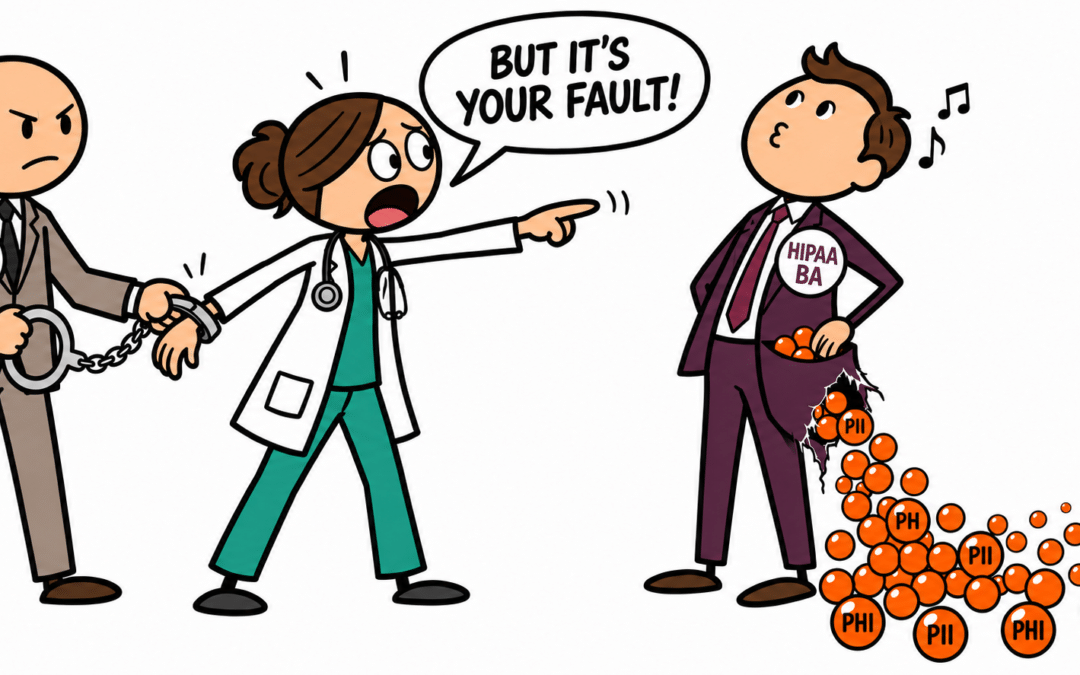
The breach happened at Labcorp’s debt collector AMCA, Labcorp’s HIPAA Business Associate, but Labcorp still agreed to pay nearly $2.3 million to multiple States. So, before you hand over those PHI marbles, ask yourself: if your HIPAA BA vendor spills them, does your contract require it to help pay for the cleanup?
The U.S. Department of Justice’s Final Rule titled Preventing Access to U.S. Sensitive Personal Data and Government-Related Data by Countries of Concern or Covered Persons became effective on April 8, 2025, but its compliance requirements are currently stayed until July 8, 2025 to give organizations time to adjust. This sweeping rule applies to U.S. hospitals, health systems, health information exchanges (HIEs), health IT and cloud vendors, research institutions, and any other U.S. persons or entities that handle, transfer, or store large volumes of sensitive personal data. HIEs should coordinate closely with legal counsel to update their compliance programs and ensure that no aspect of their technology stack or vendor chain inadvertently creates a prohibited or restricted data transaction.
Continuing the saga of Real Time and PointClickCare in the battle of the bots, the U.S. 4th Circuit recently affirmed a preliminary injunction granted in favor of Real Time against PointClickCare, finding, among other things, that PointClickCare was unable to meet a burden of proof that it met its claimed Exceptions to Information Blocking. Therefore, documentation will be critical for actors who may find themselves having to defend similar claims.
The wait is finally over!! Our brand-new, UPDATED 42 C.F.R. Part 2 Helper compliance package is now live for current members of Legal HIE. Loaded with carefully crafted checklists, tools, sample forms, policies, and training resources, all updated for the Part 2 Final Rule, it’s just what the doctor ordered for every organization to stay miles ahead of the February 16, 2026 compliance deadline! Read our new blog post for more information about what’s included with our Part 2 Helper and to get access to a sample checklist to update your Part 2 consents!
The FTC has finalized significant changes to the Health Breach Notification Rule (HBNR), a regulation originally designed to ensure that personal health records (PHRs) and similar digital health platforms notify consumers in the event of a data breach. These updates clarify the rule’s applicability to technologies outside the scope of HIPAA and impose stricter notification and transparency requirements on companies handling sensitive health data. The amendments also carry broad implications for HIEs and HINs, which are at the forefront of data interoperability and patient information sharing.
After OCR created a Morton’s Fork for hospitals and health systems by publishing its HIPAA Guidance on the Use of Online Tracking Technologies, the American Hospital Association initially stayed out of the fray. Not any more. In its letter dated May 22, 2023, AHA makes its case to HHS as to why OCR’s Online Tracking Guidance should be suspended or amended.
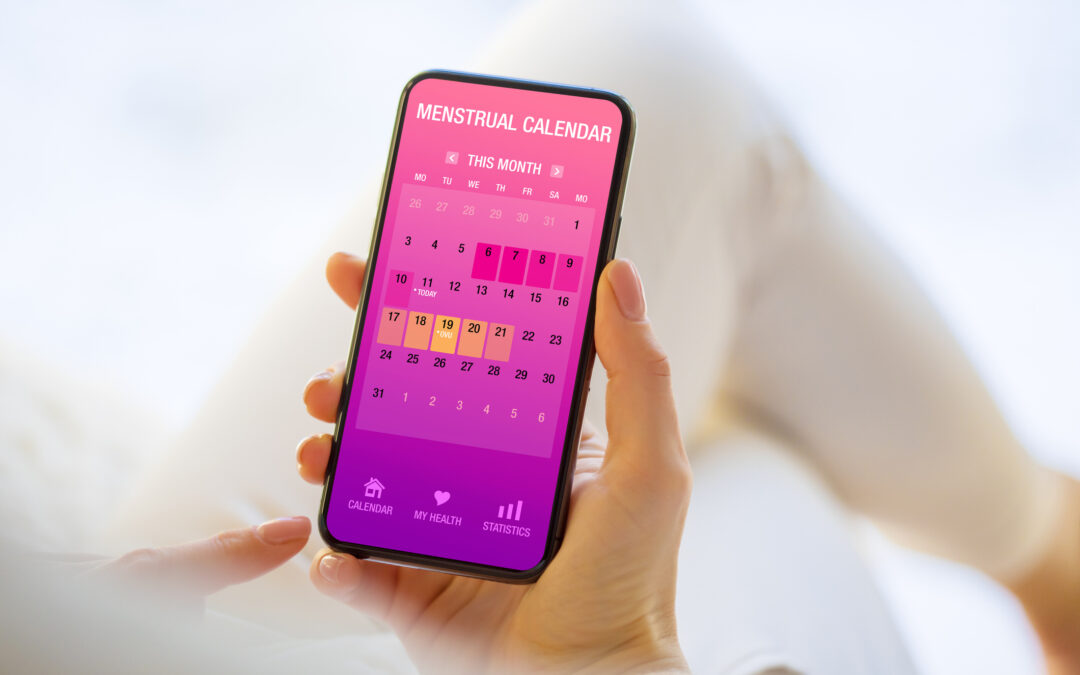
The FTC releases its second enforcement action under the Health Breach Notification Rule in just over 3 months. This time, the FTC found that a fertility app called Premom shared sensitive fertility information with third parties for unauthorized purposes. While Premom told its users that it would not share their health information with third parties without users’ consent, it used third-party automated tracking tools known as software development kits (SDKs) which shared highly sensitive health information (e.g., data about an individual user’s sexual & reproductive health, pregnancy status etc.) for advertising and marketing purposes.
The chickens have come home to roost for GoodRx. The FTC has assessed a $1.5 Million penalty against the telehealth and prescription drug discount provider for failing to report unauthorized disclosures as required by the Health Breach Notification Rule.
Yesterday, the period for public comment on the FTC’s Health Breach Notification Rule closed. The FTC’s Health Breach Notification Rule requires vendors of PHRs and PHR-related entities to notify the FTC if they experience a breach of security involving unsecured health information. Another area of change to Breach Notification is arising out of the CARES Act which was was enacted into law on March 27, 2020 and is making significant changes 42 C.F.R. Part 2. Among other changes that the CARES Act is introducing, it creates an entirely new obligation on Part 2 providers to notify SAMHSA of uses and disclosures of Part 2 data in any manner not authorized under Part 2! To date, 42 CFR Part 2 did NOT include an independent obligation to report or notify any agency (i.e., SAMHSA or HHS) of any use or disclosure of Part 2 information which was in violation of 42 CFR Part 2.
A preliminary class action data breach settlement involving UnityPoint Health should prompt health care organizations to take a second look at their breach insurance coverage as well as their contracts with vendors who process data on their behalf. Adequate cyber and breach insurance coverage is paramount and should be commensurate with the health care organization’s size, operations. Additionally, health care organizations should pay close attention to their vendor contracts, particularly limitation of liability clauses, hold harmless provisions and indemnification provisions in health IT and other contracts.
Evaluating incidents that affect protected health information (PHI) to determine whether they must be reported under HIPAA’s Breach Notification Rule is a delicate balancing act. On the one hand, a HIPAA covered entity will want to avoid reporting an incident to the Secretary of HHS if it is not required to do so under the standards set forth in HIPAA’s Breach Notification Rule. On the other hand, a HIPAA covered entity that fails to report a HIPAA Breach risks being exposed to penalties from OCR for each day such Breach was not reported when it should have been. A recent Becker’s Health IT article brought attention to a Notice posted by Ann & Robert H. Lurie Children’s Hospital of Chicago
Copiers result in .2 million settlement and CAP for Affinity Health
Yet another covered entity has been hit with over $1 million to settle potential violations of HIPAA, this time for improper disposal of photocopiers. Last week, OCR announced a settlement had been reached with...
Document Disposal Company Responsible for old Patient Records found in Park
Over 277,000 patients were notified by Texas Health Harris Methodist Hospital in Fort Worth (“Texas Health Fort Worth”) earlier this month of a breach of their health information. Only patients seen between...
WellPoint hit with .7 million for Security Weaknesses in Online Application
The increasingly heavy-handed OCR announced news yesterday of yet another resolution agreement for HIPAA violations; this time hitting WellPoint Inc., a managed care company, with $1.7 million for an...